- HOME
- News & Events
- Dr. Tomohiro Yabushita (Takizawa lab) is now studying abroad at Cincinnati Children's Hospital Medic...
News & Events
Dr. Tomohiro Yabushita (Takizawa lab) is now studying abroad at Cincinnati Children's Hospital Medical Center
January 14 2026
Name: Tomohiro Yabushita 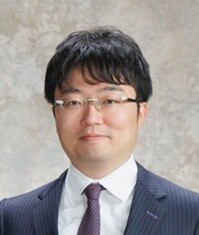
Lab: Takizawa lab
Country: Japan
Visiting period: 2025/7/1 ~ 2027/2/7
Research Institution: Cincinnati Children's Hospital Medical Center
Mentors at the destination: Dr. Daniel Lucas
I have been conducting research to elucidate how hematopoietic stem cells (HSCs), which sustain lifelong hematopoiesis, are generated during development and how their maintenance mechanisms are established. To acquire advanced bone marrow imaging techniques, I decided to pursue research training in the laboratory of Dr. Daniel Lucas at Cincinnati Children's Hospital Medical Center.
Around birth, HSCs migrate from liver and engraft into the bone marrow. However, the molecular mechanisms and cellular interactions that regulate this transition remain poorly understood. My research focuses particularly on the mechanisms governing HSC migration from the fetal liver to the bone marrow, aiming to uncover the fundamental principles of developmental hematopoiesis through bone marrow imaging-based analyses.
Based on my clinical experience as a hematologist, I hope to translate insights from this research into clinical benefits. Elucidating the mechanisms of perinatal HSC engraftment in the bone marrow may lead to improved engraftment efficiency and faster hematopoietic recovery following stem cell transplantation. While being a researcher can be demanding, it is deeply rewarding, as it allows me to immerse myself in the field I am truly passionate about.
Q1. Can you introduce yourself?
I am a hematologist and a researcher specializing in stem cell biology. I studied hematopoietic stem cell (HSC) biology in Dr.Suda lab and Dr.Takizawa lab, where my work focused on how HSCs are generated during development and how they are maintained throughout life.
Q2. What do you study at new research institution?
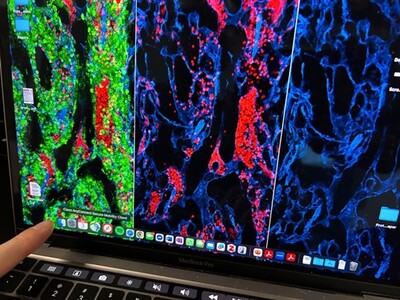
At my current institution, I focus on the mechanisms that regulate HSC migration, engraftment, and regeneration, particularly during the perinatal period. Using advanced bone marrow imaging techniques, I study how HSCs interact with their microenvironment during differentiation and regeneration.
Q3. What do you enjoy most about your research?
What I enjoy most is the process of discovery in research. Of course we can't discover something new every day, but even small findings and knowledge can change how we understand hematopoiesis, and I enjoy continuing experiments and exploring ideas in order to glimpse the exquisite complexity of life.
Q4. What made you decide to study abroad?/Why did you choose your study abroad destination?
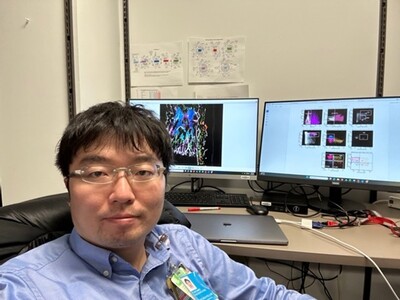
I decided to study abroad primarily to broaden my perspective. At the same time, I wanted to gain expertise in bone marrow imaging, which is essential for understanding hematopoiesis in vivo. I chose my current institution because Dr. Daniel Lucas's laboratory is a world-leading group in bone marrow niche biology, offering an ideal environment to study hematopoiesis using established imaging approaches.
Q5. How is your life there? (Country, Cost of living, Research environment)
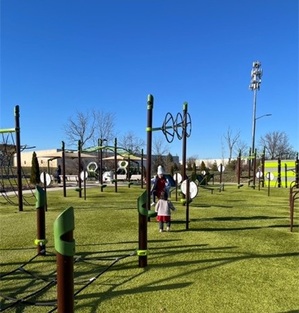
I would describe it as a colder version of Kumamoto, the greatest city in Japan. It's very comfortable and easy to live in, except for the extreme cold in winter. The area is rich in nature, and the people are very friendly. The cost of living is relatively affordable, especially compared to large metropolitan areas, and the research environment is highly supportive and collaborative. Researchers are encouraged to share ideas openly, and there is strong access to cutting-edge facilities and technical support, which allows me to focus deeply on my research.
Q6. Please tell us about your host institution?
Cincinnati Children's Hospital Medical Center (CCHMC) is one of the world's leading centers for research in developmental and pediatric biology. It serves as a hub where cutting-edge research in a wide range of fields, such as hematology, immunology, and regenerative medicine, is highly integrated.
CCHMC also has access to a diverse collection of patient samples, which enables active translational research that bridges basic science and clinical applications. In addition, the institution is equipped with comprehensive core facilities covering a broad spectrum of technologies, from genomic analyses to high-resolution imaging, allowing researchers to fully leverage state-of-the-art technical platforms. Furthermore, CCHMC regularly hosts national and international symposia and seminars in the field of hematology. As the host institution of the Myeloid Meeting, held every two years, CCHMC plays a central role in the global research community focused on bone marrow hematopoiesis.