- HOME
- Education
- Student's Voice
- 【IRCMS Internship】Mr. Muhammad Ilyas (COMSATS University Islamabad, Pakistan)
Student's Voice
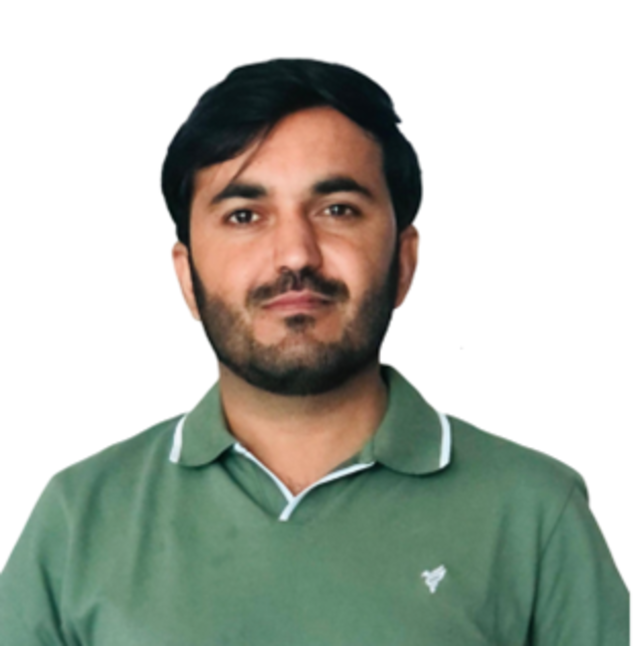
Name: Muhammad Ilyas (COMSATS University Islamabad, Pakistan)
Visiting Period: 2026/9/3-2026/9/28
Nationality: Pakistan
Lab: Takahashi Lab
1. Summary of the internship
I completed a research internship at the International Research Center for Medical Sciences (IRCMS), Kumamoto University, in the Takahashi Lab, under the supervision of Dr. Yuta Takahashi. My internship focused on transgenerational epigenetic inheritance and DNA methylation, giving me an opportunity to explore epigenetics from a perspective different from my previous research experience.
The Takahashi Lab investigates the mechanisms underlying transgenerational epigenetic inheritance, with particular interest in DNA methylation and how epigenetic information can be established, maintained, and inherited. During my internship, I was introduced to these research concepts and related molecular biology experiments. I gained hands-on experience with genomic DNA extraction, genotyping PCR, gel electrophoresis, DNA isolation from gels, sequencing sample preparation, and visualization of sequencing data using ApE. I also had the opportunity to observe cell culture and human induced pluripotent stem cell (iPSC) experiments.
I also attended laboratory meetings, weekly IRCMS meetings (WIM), and the 3rd UAAT × KOOU Bilateral Symposium, "Plasticity in Development and Diseases." The symposium provided an opportunity to learn about research in different fields and interact with researchers and students from diverse backgrounds.
Another important part of the internship was presenting my own master's research on promoter methylation in breast cancer to the Takahashi Lab. This allowed me to discuss my previous work while learning how researchers from another field approach epigenetic questions.
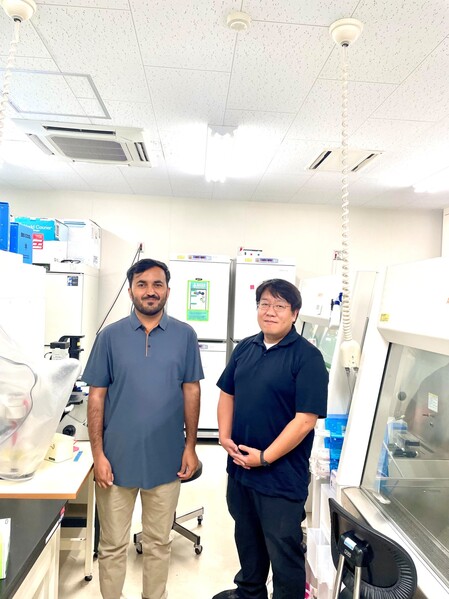
Photo: With Dr. Yuta Takahashi on the first day of my internship
2. What did this experience do for you with respect to your specific career development directions?
This internship broadened my understanding of epigenetics. My previous research was mainly focused on DNA methylation in cancer, particularly promoter methylation and its relationship with gene expression. At IRCMS, I encountered a different and deeper question: how an epigenetic state can be established and maintained, and whether such information can persist across generations. This shift from studying methylation mainly as a molecular feature of disease to thinking about it as information that can influence cellular and potentially hereditary states was particularly valuable for me.
I learned new experimental techniques, but more importantly, I learned how to connect experimental evidence with a biological question. Working in the Takahashi Lab also gave me greater confidence in discussing research, presenting my own work, asking questions, and learning from researchers with different backgrounds.
The experience strengthened my interest in epigenetics, molecular biology, chromatin regulation, and epigenetic inheritance. It also encouraged me to look beyond a single disease or experimental technique and think more broadly about how epigenetic mechanisms contribute to development, disease, and inheritance.
3. What did you enjoy about life at Kumamoto University, Kumamoto city, or Japan?
My time in Kumamoto was not only a research experience but an opportunity to spend an extended period in a Japanese research environment while living in a foreign country for the first time. I enjoyed the peaceful atmosphere around Kumamoto University and appreciated the kindness and helpfulness of the people I met. Everyone was welcoming and encouraging.
The most memorable part of my stay was the time spent with the Takahashi Lab members. The farewell reception at the end of my internship was especially meaningful. Receiving my completion certificate and a Kumamoto University shirt, and taking a group photograph with the lab members, made a memorable conclusion to my three weeks at IRCMS.
Along with my research, it was also a valuable opportunity to experience the disciplined and orderly way of life in Japan. I enjoyed walking through the streets and visiting historical places such as Kumamoto Castle. Although the internship was short, I felt that I became part of the laboratory environment. Leaving Kumamoto with new scientific knowledge, meaningful connections, and lasting memories made the experience especially meaningful.
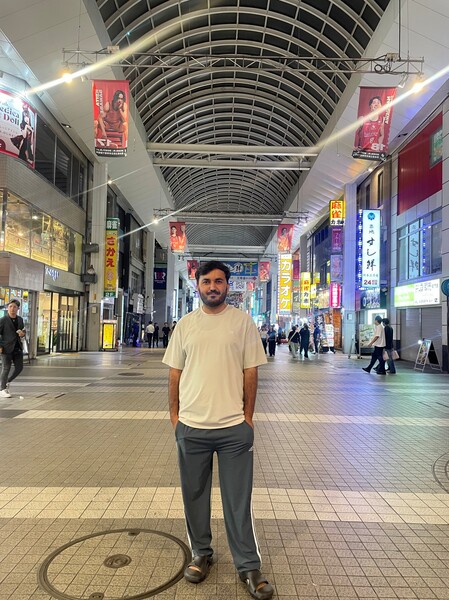
Photo: Exploring Kumamoto City
4. Message to prospective students
I would strongly recommend the IRCMS Internship Program to students who want to experience research in an international environment.
For me, the value of this internship was not limited to learning laboratory techniques. It was an opportunity to see how a research question develops into experiments, how researchers discuss evidence, and how different scientific backgrounds can come together to understand a complex biological problem.
I am sincerely grateful to Dr. Yuta Takahashi, the Takahashi Lab members, and the IRCMS team for their guidance, support, and kindness throughout my stay.
I came to Kumamoto to learn about epigenetic inheritance, but I left with a broader view of what research can be. This experience will remain an important part of my journey as a researcher.
ありがとうございました、熊本!
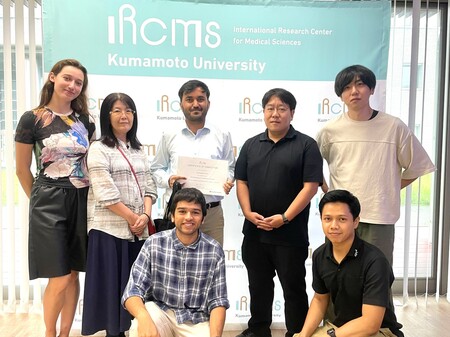
Photo: Farewell gathering with the Takahashi Lab members

